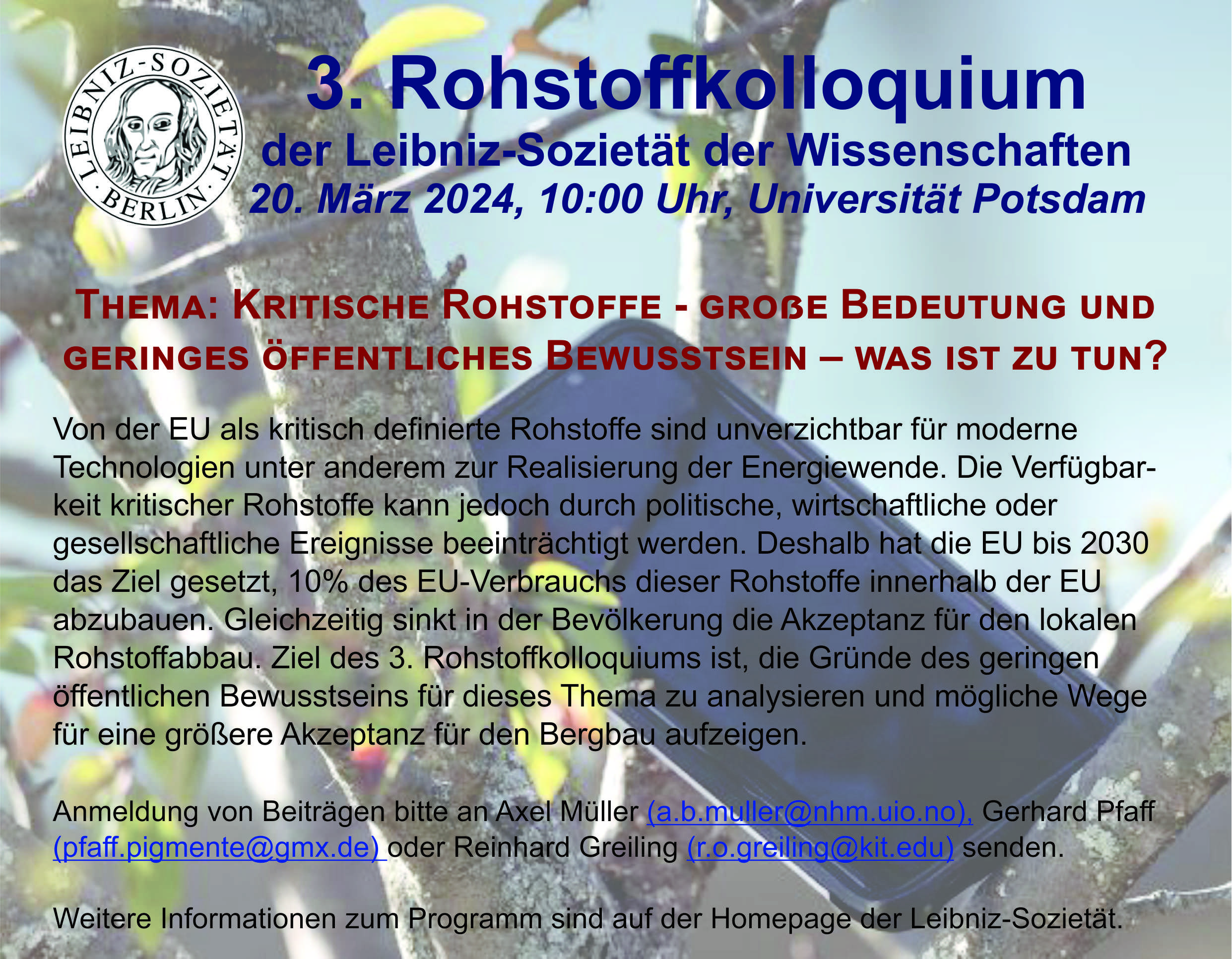
Einladung zum 3. Rohstoffkolloquium der Leibniz-Sozietät

Die Leibniz-Sozietät der Wissenschaften zu Berlin e. V.
lädt ein zur Tagung
Raumfahrthistorisches Kolloquium 2023.
Ort: Einstein-Saal der Archenhold-Sternwarte, Alt-Treptow 1, 12435 Berlin
Zeit: 18. November 2023, 10.00-17.00 Uhr
Clean sheet wagering represents one of the most analytically demanding yet rewarding approaches in football betting markets. This specialized form of wagering requires bettors to predict whether a team will prevent their opponents from scoring throughout an entire match, demanding comprehensive understanding of defensive statistics, tactical formations, and situational factors. The strategic complexity inherent in clean sheet betting has evolved significantly since bookmakers first introduced these markets in the early 2000s, transforming from a niche offering into a mainstream betting category. Platforms like Betzella have recognized the sophisticated nature of this market, providing bettors with detailed statistical tools and competitive odds structures that enable informed decision-making in defensive performance predictions.
The concept of wagering specifically on defensive outcomes emerged as football betting markets expanded beyond traditional match result predictions. During the 1990s, bookmakers began experimenting with proposition bets that isolated individual match components, recognizing that bettors sought more granular ways to express their analytical insights. Clean sheet markets gained particular traction in European betting circles around 2003-2004, coinciding with the rise of defensively dominant teams in Serie A and the Premier League’s increasing tactical sophistication.
Statistical analysis revolutionized clean sheet wagering between 2008 and 2015, as advanced metrics like expected goals against (xGA) and defensive actions per 90 minutes became accessible to the betting public. This data democratization fundamentally altered how serious bettors approached defensive performance predictions. Platforms adapted by incorporating live statistics, historical clean sheet percentages, and opposition offensive metrics directly into their betting interfaces. Betzella’s approach reflects this evolution, offering bettors comprehensive defensive analytics that inform clean sheet assessments across multiple leagues and competitions.
The market structure itself has diversified considerably, expanding from simple yes/no propositions to include both teams to keep clean sheets, half-time clean sheets, and combined clean sheet accumulators. This diversification reflects the betting industry’s recognition that defensive performance analysis operates on multiple dimensions, with first-half defensive solidity often differing significantly from full-match outcomes.
Successful clean sheet wagering demands systematic evaluation of multiple defensive indicators rather than reliance on superficial statistics. The most fundamental metric remains goals conceded per match, but context transforms this raw number into actionable intelligence. A team averaging 0.4 goals conceded per game against top-half opposition demonstrates materially different defensive quality than one achieving the same average exclusively against lower-table teams.
Expected goals against provides superior predictive value compared to actual goals conceded over small sample sizes, as it accounts for shot quality and chance creation patterns that raw scoring data obscures. Teams consistently outperforming their xGA figures typically experience regression toward statistical means, while those underperforming often improve their clean sheet frequency as luck normalizes. For those seeking comprehensive approaches to defensive wagering, a win to nil betting guide offers detailed frameworks for combining clean sheet predictions with match result forecasts, creating higher-odds combinations that maintain statistical validity.
Tactical systems profoundly influence clean sheet probability, with formations and pressing schemes creating measurably different defensive outcomes. Teams employing low defensive blocks with compact midfield structures typically concede fewer high-quality chances, even when surrendering territorial control. Conversely, high-pressing systems that aggressively pursue ball recovery in advanced positions may generate more turnovers but create transitional vulnerabilities when bypassed. Betzella’s statistical resources enable bettors to cross-reference tactical approaches with actual defensive performance, identifying situations where systemic advantages align with favorable odds.
Personnel availability represents another critical variable, as defensive partnerships develop communication patterns and positional understanding that cannot be immediately replicated by replacement players. Central defensive pairings with extensive playing time together demonstrate statistically significant improvements in clean sheet frequency compared to makeshift combinations. Goalkeeper form cycles also substantially impact defensive outcomes, with shot-stopping performance varying considerably across even short timeframes.
Match context dramatically influences clean sheet probability in ways that basic statistics fail to capture. Teams protecting narrow leads during final match portions often adopt explicitly defensive postures, substantially reducing opponent scoring opportunities through tactical adjustments and personnel substitutions. Conversely, teams chasing deficits commit additional players forward, creating defensive vulnerabilities that decrease clean sheet likelihood even for ordinarily solid defensive units.
Competition-specific patterns emerge across different tournaments and league structures. Cup competitions frequently produce more conservative tactical approaches in first-leg fixtures, as teams prioritize avoiding away goals and maintaining competitive balance for return matches. Domestic leagues exhibit seasonal patterns, with early-season matches often featuring higher clean sheet frequencies as teams emphasize defensive organization before offensive cohesion fully develops.
Weather conditions and pitch quality affect clean sheet probability through their impact on passing accuracy and offensive fluidity. Heavy rainfall and strong winds reduce shooting accuracy and disrupt intricate attacking patterns, generally favoring defensive outcomes. Temperature extremes similarly influence match tempo and player execution, with particularly hot conditions typically producing lower-intensity contests that favor defensive solidity.
Referee tendencies constitute an underappreciated variable in clean sheet analysis. Officials with higher foul-calling rates disrupt offensive rhythm and provide defending teams additional opportunities to reorganize defensively after conceding possession. Referees reluctant to award penalties reduce the probability of scoring from high-conversion set pieces, marginally improving clean sheet odds for defending teams.
Clean sheet markets demand rigorous probability calibration, as the binary nature of these wagers creates sharp distinctions between successful and failed predictions. Converting bookmaker odds into implied probabilities provides the foundation for identifying value opportunities, with sustainable profitability requiring bettors to consistently identify situations where their assessed probability exceeds market pricing.
Correlation between clean sheets and match results creates both opportunities and risks for combination wagers. Home favorites keeping clean sheets win matches approximately 85-90% of the time across major European leagues, creating natural pairings for accumulated bets. However, this correlation also means bookmakers price these combinations efficiently, requiring careful selection of situations where defensive and result probabilities align favorably.
Variance management becomes essential given clean sheet wagering’s binary outcomes and relatively modest odds ranges. Even expertly analyzed positions typically offer odds between 1.80 and 3.50, requiring high accuracy rates for long-term profitability. Betzella’s platform facilitates disciplined bankroll management through customizable stake controls and detailed betting history tracking, enabling bettors to maintain consistent unit sizing despite inevitable losing sequences.
Hedging opportunities arise particularly in live betting markets, as clean sheets become progressively more likely as matches advance without scoring. Bettors holding pre-match clean sheet positions can secure guaranteed profits by backing opposition scoring during later match stages when odds shift substantially. This dynamic creates strategic optionality absent from simpler betting markets.
Clean sheet wagering ultimately rewards systematic analysis, tactical understanding, and disciplined probability assessment. The market’s complexity creates inefficiencies that informed bettors can exploit through comprehensive evaluation of defensive metrics, situational contexts, and personnel factors. As analytical tools continue advancing and data accessibility expands, the strategic elements of clean sheet betting will further develop, rewarding those who approach these markets with appropriate rigor and statistical sophistication.
Arbeitskreis Geo-, Montan-, Umwelt-, Weltraum- und Astrowissenschaften
Wir laden herzlich ein:
Kolloquium
zum Gedenken der Leibniz-Sozietät an ihr Mitglied Helmut Moritz, der am 21.10.2022 verstarb, am 01.11.2023 seinen 90. Geburtstag hätte feiern können, verbunden mit der ersten Auswertung der 28. Generalversammlung der Internationalen Union für Geodäsie und Geophysik, die im Juli 2023 in Berlin stattfand.
Näheres s. Veranstaltungshinweis.
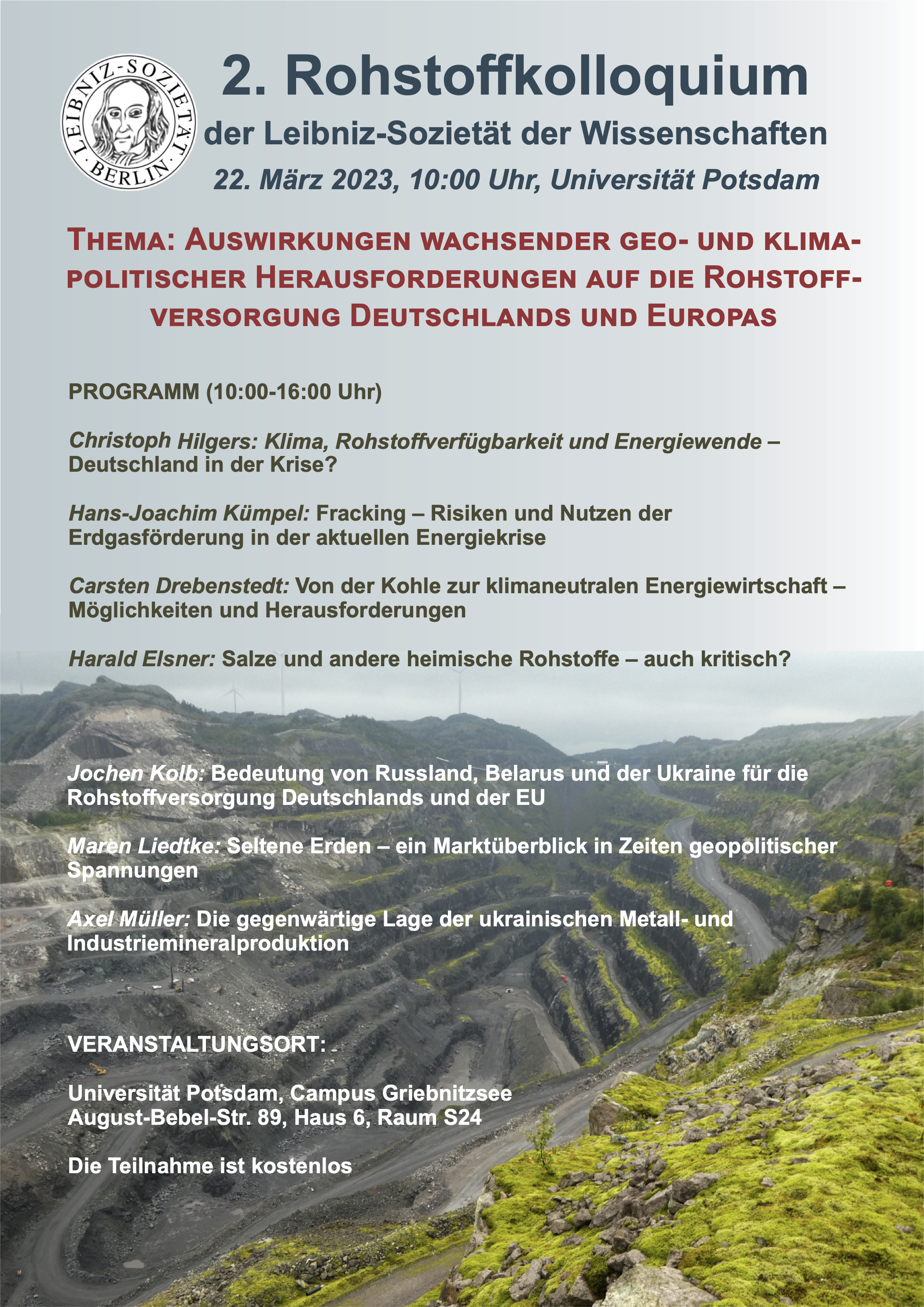
Am 22. März 2023 veranstaltete die Leibniz-Sozietät der Wissenschaften zu Berlin das Kolloquium „Kritische Rohstoffe: Auswirkungen wachsender geo- und klimapolitischer Herausforderungen auf die Rohstoffversorgung Deutschlands und Europas“. Das Kolloquium stellte die Fortsetzung der vor einem Jahr durchgeführten Veranstaltung „Kritische Rohstoffe, Gewinnung bis Entsorgung: Die Geowissenschaften als Problemlöser“ dar.
In einem Vortragsraum der Universität Potsdam auf dem Campus Griebnitzsee begrüßte die Präsidentin der Leibniz-Sozietät Gerda Haßler die Teilnehmerinnen und Teilnehmer des Kolloquiums. Diese nahmen sowohl in Präsenz als auch per Zoom am Kolloquium teil. In ihrer Eröffnung verwies sie zunächst auf die im vergangenen Jahr stattgefundene Veranstaltung zu kritischen Rohstoffen, aber auch darauf, dass es bereits eine lange Tradition in der Leibniz-Sozietät gibt, grundlegende Probleme in Natur und Technik aufzugreifen und den Umgang des Menschen und der Gesellschaft damit in ihren Veranstaltungen zu thematisieren. Sie hob hervor, dass mit dem Thema des Kolloquiums ein sehr wichtiges Problemfeld gewählt wurde, dessen Auswirkungen uns täglich begleiten. Sie führte aus, dass wir im Alltag ständig Produkte benutzen, die aus Rohstoffen bestehen, über deren Herkunft wir uns nur selten Gedanken machen. Dabei geht es nicht zuletzt darum, dass die eingesetzten Rohstoffe auf faire Weise gewonnen, verarbeitet und genutzt werden. Ohne eine sichere Rohstoffversorgung besteht für Deutschland und Europa die Gefahr, bei wichtigen Zukunftstechnologien wie der Elektromobilität, der Digitalisierung und der Energiewende an Wettbewerbsfähigkeit zu verlieren. Durch die starke Industrie zählt Deutschland zu den weltweit größten Rohstoffkonsumenten, womit die verantwortungsvolle Gewinnung und die effiziente Nutzung von Rohstoffen, wo immer möglich im Kreislauf, von höchster Wichtigkeit ist. In diesem Zusammenhang verwies Gerda Haßler darauf, dass die Anstrengungen zum Aufbau einer widerstandsfähigen Rohstoff-Wertschöpfungskette beschleunigt werden müssen, indem nicht nur in die Gewinnung von Primärrohstoffen, sondern auch in heimische Raffinerieanlagen, Recycling sowie Forschung und Entwicklung zu Rohstoffen investiert wird. Die Präsidentin bedankte sich am Ende ihrer Ausführungen bei allen Referenten sowie bei den Organisatoren der Veranstaltung Gerhard Pfaff (MLS), Reinhard O. Greiling (MLS) und Axel Müller (MLS) und wünschte der Tagung einen erfolgreichen Verlauf.
Nach der Eröffnung folgten im Verlauf des Kolloquiums sieben Fachvorträge, die im ersten Teil von Reinhard O. Greiling und im zweiten Teil von Gerhard Pfaff moderiert wurden. Die Beiträge umfassten folgende Themen: WEITER
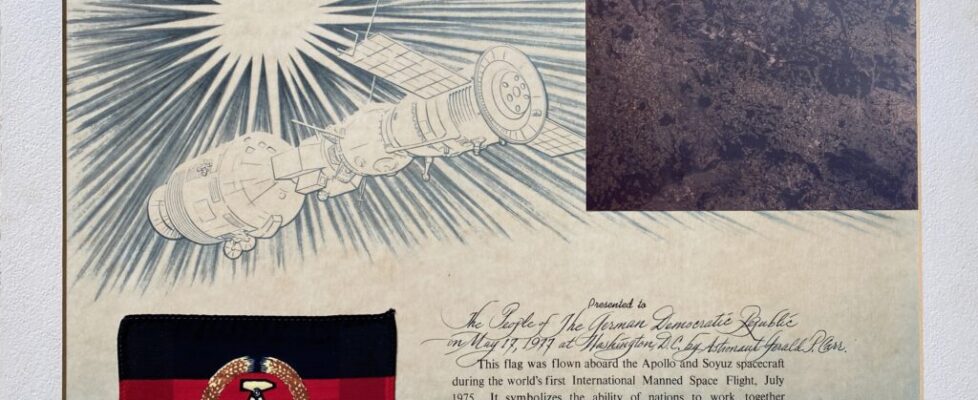
Das Raumfahrthistorische Kolloquium 2022 fand am 19.11.2022 nach vierjähriger Pause wieder als Präsenzveranstaltung bei ansprechender Teilnehmerzahl an gewohntem Ort im Einstein-Saal der Archenhold-Sternwarte statt. Die Raumfahrthistorischen Kolloquien waren 1981 von Dieter B. Herrmann initiiert und bis zu seinem Tod im Jahresrhythmus unter seiner Regie weitergeführt worden. Die letzte Präsenzveranstaltung war 2018. Die Coronapandemie unterbrach den Jahresrhythmus der Kolloquien. Auch 2020 konnte das Raumfahrthistorische Kolloquium als Präsenzveranstaltung nicht durchgeführt werden, sondern nur in verkürzter Fassung 2021 als Zoom-Konferenz der Leibniz-Sozietät. Dieter B. Herrmann hatte dieses Kolloquium noch organisiert und den entsprechenden Tagungsband über „Wissenschaftlich-technische Aspekte der Venuserkundung, Gestern – Heute – Morgen“ herausgegeben (Abhandlungen der Leibniz-Sozietät, Band 71). Die endgültige Fertigstellung dieses Bandes hat er nicht mehr erleben können. WEITER

Generalversammlungen der IUGG finden alle vier Jahre statt. Neben einer Standortbestimmung über den jeweiligen Wissensstand geben sie weitreichende Impulse für zukünftige Forschungen. Die Bundesrepublik Deutschland war das letzte Mal Gastgeber 1983 mit Tagungsort Hamburg (s. Beitragsbild). Zur 28. Generalversammlung der IUGG 2023 in Berlin werden ca. 5000 Wissenschaftler und Wissenschaftlerinnen erwartet. Zwei unserer Mitglieder sind maßgeblich an der Organisation dieser bedeutenden Veranstaltung beteiligt: Jürgen Müller, Vorsitzender des Nationalkomitees für Geodäsie und Geophysik (NKGG), ist Vorsitzender des Wissenschaftlichen Programmkomitees, und Harald Schuh ist Vorsitzender des Lokalen Organisationskomitees.
Der 2. Workshop zur Einstimmung auf die Generalversammlung fand am 4. November von 14:00 bis 16:30 als Zoom-Veranstaltung statt und wurde von 27 Teilnehmern besucht. Organisiert wurde er von GFZ Potsdam, NKGG und dem Arbeitskreis GeoMUWA der Leibniz-Sozietät. WEITER
Der Vorsitzende des Deutschen Nationalkomitees für Geodäsie und Geophysik (NKGG) MLS Jürgen Müller kündigt in Absprache mit dem Sprecher des Arbeitskreises Geo-, Montan-, Umwelt-, Weltraum- und Astrowissenschaften der Leibniz-Sozietät MLS Dietrich Spänkuch an, dass das Nationalkomitee
am 4. November, 14:00 – 16:30 Uhr einen
2. Workshop “Zur Einstimmung auf die Generalversammlung der Internationalen Union für Geodäsie und Geophysik (IUGG), Juli 2023 in Berlin”
veranstalten wird. Der Workshop wird als Online-Videokonferenz via Zoom durchgeführt. Gastgeber wird das Deutsche GeoForschungsZentrum Potsdam sein.
Die IUGG wurde 1919 in Brüssel gegründet. Ihre Generalversammlungen finden alle vier Jahre statt; sie sind bedeutende wissenschaftliche Veranstaltungen mit Hunderten von großen und kleinen Tagungen und Zusammenkünften und es werden bis zu 5000 Teilnehmer erwartet. Die letzte Generalversammlung der IUGG in Deutschland fand 1983 in Hamburg statt und in 2023 wird sie erstmals in der deutschen Hauptstadt durchgeführt.
Sachkundige Interessenten sind zum Workshop herzlich willkommen. Um frühzeitige Anmeldung wird gebeten.
Das detaillierte Programm mit den Zugangsdaten zum Online Meeting finden Sie hier.

Am traditionellen Tagungsort der Leibniz-Sozietät der Wissenschaften – der Archenbold Sternwarte – findet vom 7. bis zum 9. Juli das Space Renaissance Art & Science Festival der Space Renaissance International (SRI) statt.
Aus dem vielfältigen Programm:
Day 1 – Philosophy & Policy Day – 7 July 2022
Panel on “Civilian Space Development”
How to accelerate it? How to support new space industry to achieve the goal of kicking off civilian space development within 2030? What should space agencies do, and what should the space activist organizations do?
Kolloquium zur “Zivilen Weltraumentwicklung” (in deutscher Sprache)
Day 2 – Astronauts and Civilians, Science & Tech Day – 8 July 2022
Panel on Space Habitats
Panel on Analog Training
Kolloquium zum Thema Raumfahrt (in deutscher Sprache)
Space Night: Barbecue at Observatory’s Garden + Night Observation at the giant telescope
Day 3 – Space Art Day – 9 July 2022
Art (Vormittag – in deutscher Sprache)
Art (Nachmittag – English language)
Artists: Priscilla Chase Thomas, Barbara King, Sarah Drahtm Mary Kuiper, Eva Petric, Borghildur Indridadottir, ArtMoonMars Artists, MoonGallery Artists.
Kostenlose Registrierung für die Präsenz- oder eine virtuelle Teilnahme hier.
 Der ehemalige Präsident der Leibniz Sozietät, Dieter B. Herrmann, war Ehrenmitglied des Verbands Space Renaissance International und der Arbeitskreis GeoMUWA strebt eine Zusammenarbeit an. Mehr zu der ausrichtenden Organisation hier:
Space Renaissance International (SRI) is a global organisation dedicated to getting humanity off-world, not just astronauts engaged in pioneering exploration, but humanity, en masse … because it is a natural progression in our development as a species. Humanity can’t continue to live in an unsustainable manner, within a closed-system. This is what has led to many of our current cultural and socio-economic problems.
The mission of SRI is to facilitate the development of mankind as an interplanetary society, with aspirations to see humanity grow to become an interstellar civilisation.
It was Elon Musk, founder of SpaceX who said “In order for us to have a future that’s exciting and inspiring, it has to be one where we’re a space-bearing civilization.“
Am 17. März 2022 veranstaltete die Leibniz-Sozietät der Wissenschaften zu Berlin die Tagung „Kritische Rohstoffe, Gewinnung bis Entsorgung: Die Geowissenschaften als Problemlöser“
Im Balkonsaal des Rathauses Berlin Tiergarten begrüßte die Präsidentin der Leibniz-Sozietät Gerda Haßler die Teilnehmerinnen und Teilnehmer der Tagung. In ihrer Eröffnung verwies sie zunächst darauf, dass es bereits eine lange Tradition in der Leibniz-Sozietät gibt, grundlegende Probleme in Natur und Technik aufzugreifen und den Umgang des Menschen und der Gesellschaft damit in ihren Veranstaltungen zu thematisieren. Sie hob hervor, dass der Arbeitskreis Geo-, Montan-, Umwelt-, Weltraum- und Astrowissenschaften, der diese Tagung organisiert hatte, einer der aktivsten und erfolgreichsten der Leibniz-Sozietät ist. In ihren Ausführungen ging sie auf die entscheidende wirtschaftliche Bedeutung von Rohstoffen ein und merkte an, dass viele von diesen innerhalb der europäischen Union nicht vorrätig sind bzw. nur begrenzt abgebaut werden können. Das wirft Fragen nach einer angemessenen Lagerhaltung auf, um Unterbrechungen der Produktion und Versorgung zu vermeiden. Auch die Suche nach alternativen Bezugsquellen sowie nach engeren Partnerschaften zwischen den Akteuren, die mit kritischen Rohstoffen befasst sind, spielt eine immer wichtigere Rolle. Bei derartigen Rohstoffen geht es neben der Verfügbarkeit oft auch um die politische Lage im Abbaugebiet sowie um Arbeits- und Umweltbedingungen, unter denen die Förderung stattfindet. Auch die Wiederverwendung kritischer Rohstoffe wird in diesem Zusammenhang immer wichtiger. Die COVID-19-Krise führte in vielen Regionen der Welt zu einer verschärften Auseinandersetzung mit der Organisation von Lieferketten, insbesondere dort, wo die Bezugsquellen für Rohstoffe und Zwischenprodukte sich stark auf wenige Länder konzentrieren. Der vor drei Wochen durch Russland begonnene Krieg in der Ukraine hat nicht nur eine humanitäre Katastrophe verursacht, sondern auch viele bisherige Überlegungen im Hinblick auf die Versorgung mit Rohstoffen infrage gestellt. Die Welt ist schon jetzt nicht mehr dieselbe wie vorher: Folgen werden abzuschwächen, Leid wird zu mindern und Zukunft wird neu zu denken sein. Die Präsidentin bedankte sich am Ende ihrer Ausführungen bei allen Referenten sowie bei den Organisatoren der Veranstaltung Reinhard O. Greiling (MLS) und Gerhard Pfaff (MLS) und wünschte der Tagung einen erfolgreichen Verlauf.
Nach der Eröffnung folgten im Verlauf der Tagung sechs Fachvorträge, die im ersten Teil von Gerhard Pfaff und im zweiten Teil von Reinhard O. Greiling moderiert wurden. Die Beiträge umfassten folgende Themen: WEITER
Organisation und Moderation: Reinhard Greiling & Gerhard Pfaff (MLS*)
Do. 17. März 2022 – 12.30 bis 18.00 Uhr
Ort: Rathaus Berlin-Tiergarten, Balkonsaal
weitere Informationen im Veranstaltungskalender
Eröffnung und Begrüßung
Gerda Haßler (Präsidentin der Leibniz-Sozietät)
Rohstoffverfügbarkeit und Energiewende. Christoph Hilgers (KIT Karlsruhe & ThinkTank Industrielle Ressourcenstrategien)
Lithium for UK – Lithium for Europe: Research in Progress. Reimar Seltmann (MLS)
Lithiumextraktion aus Geothermalwässern im Oberrheingraben. Jens C. Grimmer (GeoThermal Engineering GmbH Karlsruhe)
Aerogeophysikalische Rohstofferkundung in der Mongolei – ein Projekt im Rahmen der Deutsch-Mongolischen Rohstoffpartnerschaft. Rainer Herd (TU Cottbus-Senftenberg)
Mineral Systems Analysis – von der Entstehung der Freiberger Silbergänge zur Entwicklung innovativer Explorationsvektoren. Mathias Burisch (TU Bergakademie Freiberg & Helmholtz-Institut für Ressourcentechnologie Freiberg)
Vorstellung, Arbeit und erste Resultate des H2020 GREENPEG Rohstoffexplorationsprojektes. Axel Müller (MLS)
Die sichere Endlagerung wärmeerzeugender Nuklearabfälle. Hennes Obermeyer (MLS)
(*) MLS: Mitglied der Leibniz-Sozietät
Der Vorsitzende des Deutschen Nationalkomitees für Geodäsie und Geophysik (NKGG) MLS Jürgen Müller kündigt in Absprache mit dem Sprecher des Arbeitskreises Geo-, Montan-, Umwelt-, Weltraum- und Astrowissenschaften der Leibniz-Sozietät MLS Dietrich Spänkuch an, dass das Nationalkomitee
am 29. Oktober 2021, 13:00 – 16:00 Uhr einen
Workshop „Zur Einstimmung auf die Generalversammlung der Internationalen Union für Geodäsie und Geophysik (IUGG), Juli 2023 in Berlin“
veranstalten wird. Der Workshop wird als Online-Videokonferenz via Zoom durchgeführt. Gastgeber wird das Deutsche GeoForschungsZentrum Potsdam sein.
Die IUGG wurde 1919 in Brüssel gegründet. Ihre Generalversammlungen finden alle vier Jahre statt; sie sind bedeutende wissenschaftliche Veranstaltungen mit Hunderten von großen und kleinen Tagungen und Zusammenkünften und es werden bis zu 5000 Teilnehmer erwartet. Die letzte Generalversammlung der IUGG in Deutschland fand 1983 in Hamburg statt und in 2023 wird sie erstmals in der deutschen Hauptstadt durchgeführt.
Sachkundige Interessenten sind zum Workshop herzlich willkommen. Um frühzeitige Anmeldung wird gebeten.
Das detaillierte Programm mit den Zugangsdaten zum Online Meeting finden Sie hier.